
The EOC Battle Rhythm: Your EOC Should Not Be Running the Incident’s Clock
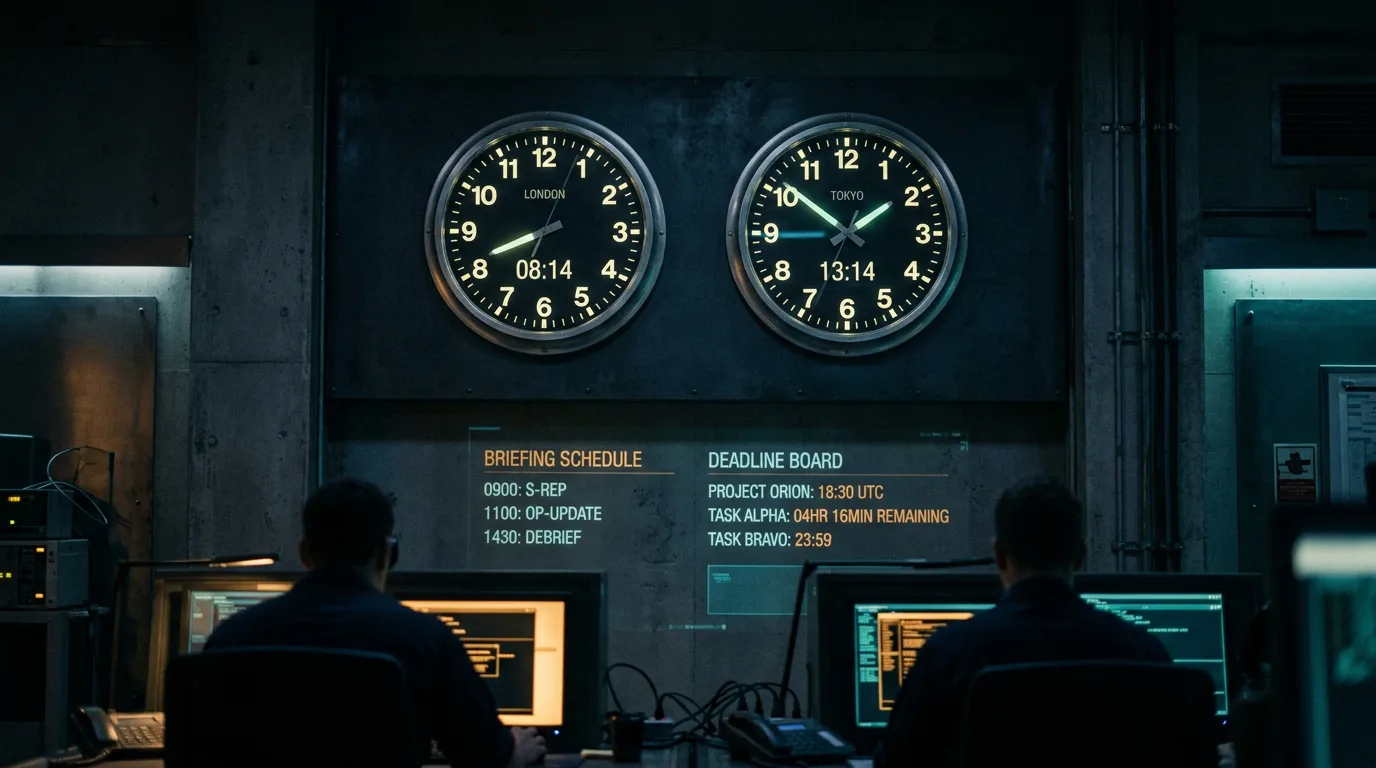
The most common EOC scheduling mistake is not having no rhythm. It is borrowing the incident's.
An incident goes to 12-hour operational periods, so the EOC goes to 12-hour operational periods. It feels like alignment. What it actually does is bind the EOC's decision cycle to a tempo set by a different organization solving a different problem — and if a second incident starts up on a different clock, the EOC now has no clock of its own to fall back on.
Two Clocks Is Doctrine
FEMA doctrine is explicit: the EOC operational period may differ from the Incident Command operational period, and it should be established in the EOC's own SOPs. A 12-hour incident operational period running alongside a 24-hour EOC period is correct. It is not a compromise or a sign of misalignment.
The reason is that the two organizations do different work. The Incident Command Post runs the Planning P and produces an IAP that tasks responders shift by shift — tactical decisions on a tactical cycle. The EOC runs a battle rhythm and produces its own products against resource allocation and coordination decisions, which mostly do not turn over every twelve hours. Setting the EOC to the incident's tempo means running a planning cycle four times faster than the decisions it supports actually change.
Setting the EOC's Period
Three questions determine the right length, and none of them is "what is the incident doing."
How often do our decisions actually change? If resource allocation priorities are stable across a day, a 24-hour period fits. If the jurisdiction is reallocating scarce resources between competing incidents every few hours, it does not.
What can we staff? A 12-hour EOC period requires two full planning cycles per day, each with a meeting, a product, and a distribution. Most EOCs cannot sustain that past 72 hours. An unsustainable period length quietly becomes a fictional one — the meeting gets skipped, and the rhythm dies before the incident does.
What do our partners need? The state wants the SitRep at a predictable time. The elected official wants the briefing before their press availability. Those external deadlines are real constraints, and they usually argue for a daily cycle anchored to when other people need your output.
The Rhythm Is a List of Deadlines
Once the period is set, the battle rhythm is the concrete schedule hanging off it: SitRep publication times, briefing schedule, situation picture update intervals, the planning meeting, and shift change. It is approved by EOC leadership and coordinated outward with field operations and the Joint Information System, so the EOC's cycle and the public information cycle are not fighting each other.
The value is predictability. A partner agency that knows the SitRep publishes at 0600 and 1800 stops calling to ask. A section that knows the planning meeting is at 1400 has its inputs ready at 1345. Every deadline that partner agencies can rely on is a phone call the EOC does not have to answer — and unanswered calls are how coordination capacity gets spent.
Where the Rhythm Actually Breaks
Not at the start. At the second incident.
One incident, and the EOC's rhythm and the incident's rhythm can drift into rough alignment without anyone noticing the difference. Add a second incident on a different operational period and the EOC is suddenly serving two tactical clocks plus its own. Whichever incident's planning meeting is louder starts driving the EOC's cycle, and the EOC's own products slip.
This is exactly when having written the period into the SOP pays off. The rhythm holds because it was decided in advance, not negotiated at 0200 against whoever is escalating hardest.
The second break point is shift change. If the rhythm's deadlines cluster near the handoff, the outgoing shift is producing the SitRep while briefing its replacement. Offset them deliberately — the handoff should sit in a quiet part of the cycle, not on top of a deliverable.
Holding It
The discipline is unglamorous: publish on time even when the content is thin. A SitRep that goes out at 0600 saying little has changed is more valuable than a better one at 0800, because the first one is something partners can build a schedule around and the second one teaches them your times are approximate.
Rhythm is not about the tempo you pick. It is about whether the tempo is real. An EOC running a 24-hour cycle it actually holds outperforms one running a 12-hour cycle it hits two times out of three — and the activation level you called should have told you which of those you can sustain before the first period ever started.
See how NIMS Logic organizes coordination by operational period, so the EOC's clock is built into the work. Explore the platform.
Ready to modernize your incident management?
See how NIMS Logic transforms emergency management from an administrative burden into operational advantage with real-time visibility and automated workflows.
Schedule a DemoPresident & Co-Founder
Martin brings over 40 years of emergency management experience to NIMS Logic, including service as a Type 1 Incident Commander. His field expertise in ICS operations, multi-agency coordination, and FEMA cost recovery drives the platform's operational design.
Continue Reading
EOC Activation Levels: What Actually Changes When You Go to Level 2
August 22, 2026
Three levels, one real decision. What triggers each activation level, who holds authority to call it, and the staffing promise most jurisdictions cannot keep.
The Whiteboard, the Spreadsheet, and the Group Text: How Most EOCs Actually Run
July 3, 2026
The EOC tech stack in the plan is not the one in the room. A look at the tools coordination actually runs on — and the exact load at which each one fails.

The ICS Org Chart and the EOC Org Chart Are Not the Same Chart
August 16, 2026
Both are NIMS. But NIMS names three EOC structures, and the same section titles do different work on either side. Here is what actually differs.