
The ICS 214 Is the Backbone of Your FEMA Project Worksheet. Are You Treating It That Way?
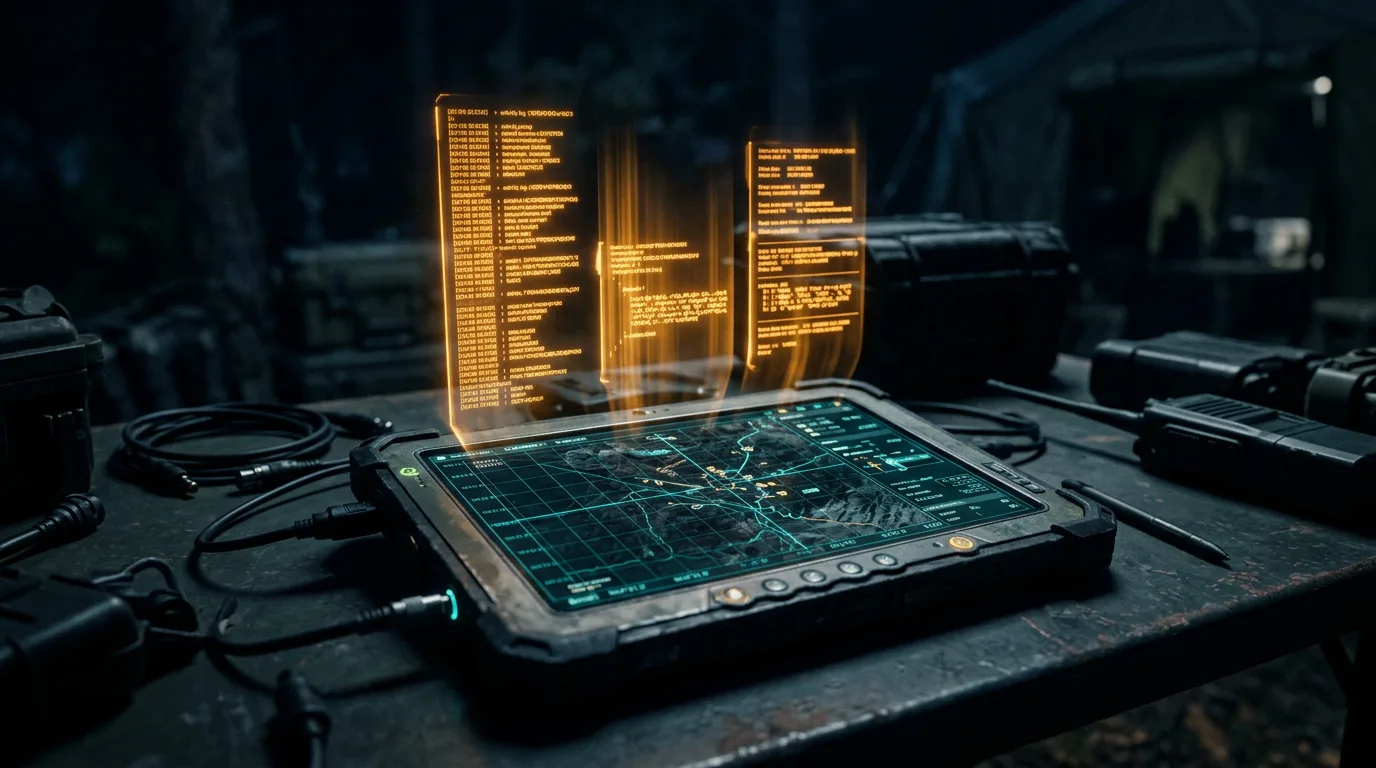
Every FEMA Project Worksheet tells the same story: what was done, who did it, when, where, and how much it cost. And every PW that gets challenged, delayed, or denied shares the same weakness — the story can't be verified.
The verification, more often than not, lives in the ICS 214 activity log — often referred to as the FEMA 214 because of the role it plays in Public Assistance documentation. It's the contemporaneous record that connects a resource's deployment to specific eligible work. Without it, a force account labor claim is just a timesheet and a check-in record. With it, you have a timestamped, supervisor-signed account of the emergency protective measures that resource actually performed.
The agencies that treat the 214 as an afterthought are the same agencies that spend months reconstructing documentation for FEMA reviewers — or writing off eligible costs entirely.
The Documentation Standard Is Rising, Not Falling
The fiscal environment around FEMA Public Assistance has shifted. The DHS Office of Inspector General has flagged billions in improper payments across PA programs — $8.1 billion in potentially ineligible COVID-19 Category B claims alone (OIG-22-46), with GAO estimating PA improper payment rates between 3.4% and 12% depending on the year. Those numbers created political pressure that flows directly downhill to applicants.
The practical effects are already visible:
- FEMA's Grants Portal now requires digital uploads of all supporting documentation. Paper-based or informal records don't make the cut.
- 2 CFR Part 200 revisions (effective 2024) strengthened procurement documentation, internal controls, and fraud risk assessment requirements for all federal grants — including PA.
- Large PWs face additional validation steps before obligation, with more rigorous Requests for Information and final inspections during closeout.
- Government efficiency mandates are accelerating the trend toward tighter controls and more granular cost breakdowns.
The direction is unmistakable: FEMA is asking for more evidence, not less. And the ICS 214 is where that evidence lives.
Why the 214 Is Your PW's Load-Bearing Document
FEMA's PAPPG requires applicants to maintain "contemporaneous records" supporting claimed costs. For force account labor — often the largest line item on a Category B PW — that means demonstrating:
- What was done — specific descriptions of emergency protective work performed
- When it was done — start and end times for each activity
- Where it was done — location of the work
- Who did it — resource identification linked to check-in and payroll records
The ICS 214 captures all four. A timesheet shows hours. A check-in record shows presence. But neither shows what the resource actually did during those hours. The 214 is the bridge between "this person was deployed" and "this person performed eligible work." Among the NIMS forms that make up Public Assistance documentation, it is the one that directly captures NIMS resource management — what each resource did, when, and under whose supervision — for every operational period they were deployed.
When a FEMA reviewer challenges a PW line item, they're asking one question: prove this resource did this work at this time in this location. If your 214s are complete, the answer is already documented. If they're not, you're reconstructing evidence weeks or months later — and auditors know the difference.
The Fraud and Abuse Problem Made This Personal
The scale of improper payments across FEMA programs — tens of billions cumulatively since Katrina — has made documentation integrity a federal priority. OIG auditors now routinely cross-reference activity logs against deployment records, GPS data, and payroll to verify claims. The bar for what constitutes "adequate documentation" is higher than it was five years ago, and it's still rising.
This isn't theoretical. Agencies that submit PW packages with incomplete 214 documentation are flagged for additional review. Agencies that submit packages where activity descriptions are vague ("performed emergency operations") rather than specific ("cleared downed trees from SR-42 between mile markers 8 and 14") get RFIs that delay obligation by months. And agencies that can't produce contemporaneous records at all face cost disallowances — regardless of whether the work was actually performed and legitimately eligible.
GPS Evidence Is Becoming the New Standard
Geolocation-stamped documentation is already the norm for debris monitoring operations, where GPS-tracked trucks verify pickup locations, haul routes, and disposal sites. That same standard is expanding into force account labor and equipment documentation.
Activity log entries that include GPS coordinates create a verification layer that's nearly impossible to challenge in audit. When a 214 entry says "conducted damage assessment at Oak Ridge Elementary" and includes a geolocation stamp confirming the resource was at that location at that time, the evidentiary chain is closed. No reconstruction needed. No ambiguity for reviewers.
Agencies still relying on paper 214s — filled out at the end of a shift from memory, if they're filled out at all — are producing documentation that looks increasingly thin compared to what digital systems can capture automatically in the field.
Closing the Gap During Operations, Not After
The most expensive documentation failure isn't a missing 214. It's a missing 214 that nobody notices until the PW package is being assembled. By then, field personnel have demobilized, memories have faded, and accurate reconstruction is difficult or impossible.
This is where platforms built on the ICS data model change the equation. When activity logs are captured digitally during operations — with timestamps, GPS coordinates, and supervisor attestation built into the workflow — documentation becomes a byproduct of doing the work, not a separate administrative burden. Systems like NIMS Logic take this further with automated compliance monitoring that identifies resources without 214 entries during the operational period and notifies supervisors while crews are still deployed and the work is still fresh. That means gaps get closed in hours, not discovered in weeks.
The NIMS Finance Section depends on this data. Every 214 entry with a missing timestamp, unclear activity description, or broken supervisory chain is a line item the Finance/Admin Section cannot defend when the PW arrives. For a 500-resource incident at $45/hour across 12-hour operational periods, each resource-OP without a 214 entry puts $540 at risk. If 20% of resources have documentation gaps across five OPs, you're looking at $270,000 in jeopardized reimbursement — from a single incident.
The agencies investing in digital ICS infrastructure that tracks the complete resource lifecycle — from check-in through demobilization, with activity logs building themselves along the way — are the ones producing PW packages that survive scrutiny the first time.
Defending the Project Worksheet?
The cost-recovery persona is built for the people whose job is to assemble PW packages that survive OIG audit — with ICS 214 activity logs auto-built during the incident, not after it.
See the cost-recovery workflow →Ready to modernize your incident management?
See how NIMS Logic transforms emergency management from an administrative burden into operational advantage with real-time visibility and automated workflows.
Schedule a DemoPresident & Co-Founder
Martin brings over 40 years of emergency management experience to NIMS Logic, including service as a Type 1 Incident Commander. His field expertise in ICS operations, multi-agency coordination, and FEMA cost recovery drives the platform's operational design.
Continue Reading

The Hidden Cost of Failed FEMA Documentation: Eligible Costs Lost to Inadequate Paperwork
March 20, 2026
Agencies lose FEMA Public Assistance dollars not because costs are ineligible, but because documentation fails to prove eligibility. Learn how to close the gap.

Mutual Aid Billing: From Handshake to Reimbursement
June 25, 2026
Mutual aid feels like the work is done when help arrives. FEMA only pays if you billed for it. Walk the path from handshake to reimbursement — and the record it takes.
FEMA 214s, T-Cards, and the Forms You Can't Reconstruct After the Fact
May 7, 2026
Searching the FEMA documentation checklist at day 22 means you are already reconstructing. The 214 and T-cards only count if captured live in the field.