
FEMA Snow Assistance: Documenting the 48 Hours That Count
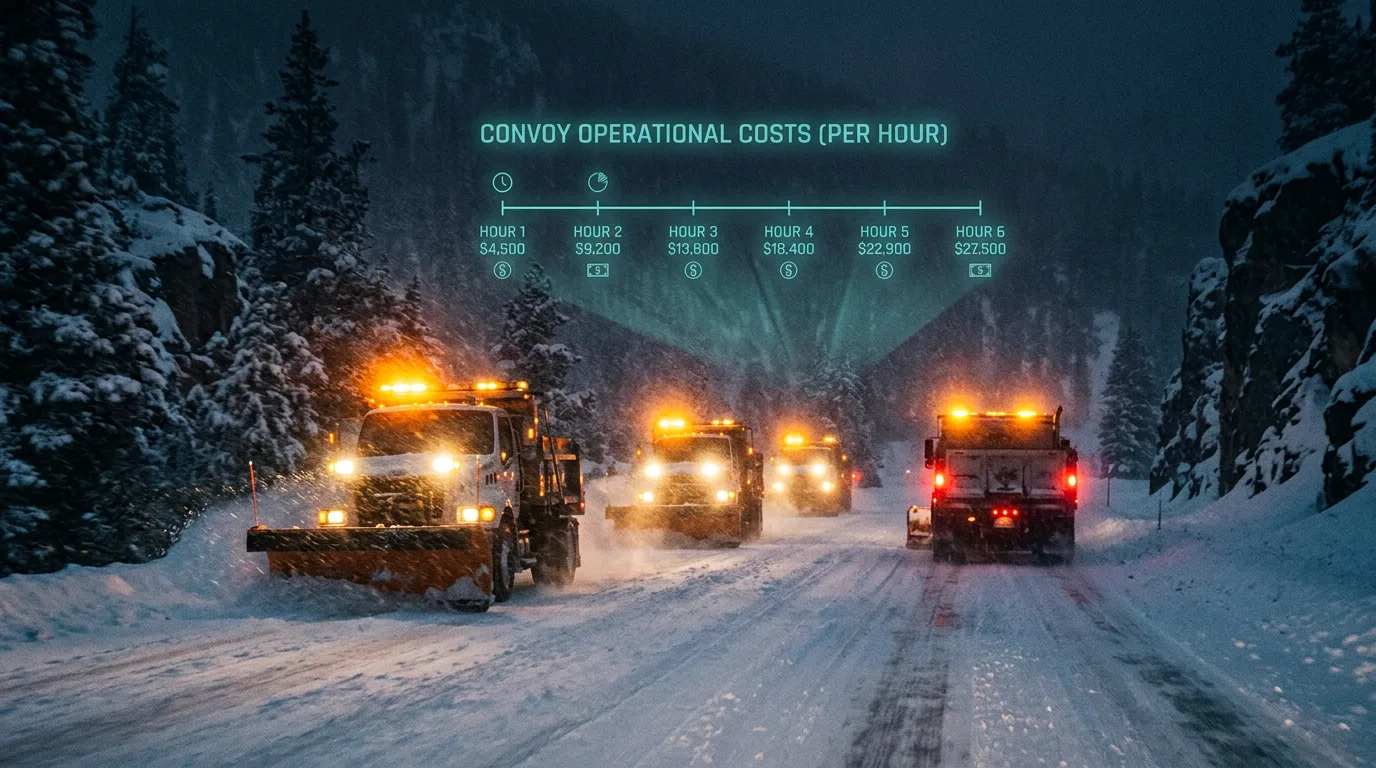
Every winter, some public works directors learn the same thing. The storm was historic, the crews ran for four days, and FEMA reimbursed two of them, and only if the county got enough snow.
FEMA snow assistance is one of the narrowest categories in Public Assistance. It is also one of the easiest to lose money on, because the eligibility rules are specific and the documentation has to be organized around a window you choose after the storm. Now, before the first event of the season, is when to set that documentation up.
What Snow Assistance Is
Snow assistance is a Category B emergency protective measure. It covers snow removal, de-icing, salting, snow dumps, and sanding of roads and other eligible facilities. It is available in two situations:
- the President declares the incident a Snowstorm, or
- a Severe Winter Storm declaration specifically authorizes snow assistance.
In either case, eligibility is decided county by county, based on snowfall.
The Snowfall Test
A county qualifies as a core county when it receives record or near-record snowfall over a 1-, 2-, or 3-day period and its Public Assistance costs exceed the countywide per capita impact indicator. FEMA generally treats snowfall within 10 percent of the record as near-record. It compares event snowfall validated by the National Weather Service against historical records from NOAA's National Centers for Environmental Information.
A contiguous county, one sharing a border with a core county, can also qualify if it received as much or more snow than the core county, even if it did not hit its own record.
The declaration request has to make that case. It must include the core and contiguous counties, the duration of snowfall according to the NWS, and daily snowfall totals for each county alongside the historical records. That data comes from the state, but counties that keep their own snowfall observations by day and by location make it easier to put together and harder to dispute.
Without Snow Assistance, Snow Removal Mostly Isn't Eligible
This is where expectations most often go wrong. A Severe Winter Storm declaration that does not authorize snow assistance does not cover routine snow clearance. Snow removal is eligible only when it is necessary to perform other eligible emergency work, such as reaching debris or giving utility crews access to downed power lines. Normal road clearance is not.
FEMA appeals show both sides of this. Applicants have been denied snow removal costs because their county did not meet the record or near-record test. Others were denied because the declaration did not authorize snow assistance, even after a storm the applicant considered record-setting.
Counties that do not meet the snowfall test also cannot include snow removal, de-icing, salting, and sanding costs in the damage estimates used to support the declaration.
The 48-Hour Window
When snow assistance is authorized, FEMA covers one continuous 48-hour period. The applicant chooses which 48 hours, normally the stretch with the highest eligible costs. Under FEMA's snow assistance policy, an applicant may use one 48-hour window for initial estimates and a different one when submitting actual costs. The policy allows a 24-hour extension only in limited cases where snowfall far exceeds the record.
That rule decides how your records need to look. To pick the right 48 hours, you need costs broken out by hour, across all of the work, for the entire event. A daily total cannot tell you whether 0600 Tuesday to 0600 Thursday beats 1800 Monday to 1800 Wednesday. Records kept by shift or by hour can.
The usual Category B labor rules also apply. For budgeted employees, overtime is generally eligible and straight time is not. Equipment hours are eligible either way, and operator records are what support them. We walked through how that labor pipeline works earlier this month. Snow assistance adds a time window on top of it.
Setting Up Before the First Storm
Winter events are long, repetitive, and run by small crews in shifts. That makes them the incidents most likely to be documented in round numbers after the fact. A few steps before the season make the difference.
Log by shift, not by day. Each plow route, salt run, and loader shift gets a start time, end time, operator, and equipment number. Then the 48-hour window can be found by query, not by argument.
Separate snow work from other storm work. Downed trees, power line access, and sheltering may be eligible under different rules than plowing. Activity descriptions that say what was done, such as "cleared access to downed lines on CR 210" versus "plowed Route 4," let each cost be claimed under the right authority.
Track materials against the timeline. Salt and sand usage needs dates and times to land inside or outside the window. A season-total inventory figure does not.
Keep contracts within the window. Contract snow removal is reimbursed for the same period. Make sure contractor invoices show dates and hours, not just a lump sum.
Know your snowfall records. Find your county's historical record snowfall totals now. When the forecast shows a storm approaching that range, you will know a snow assistance request is possible, and your crews can start documenting accordingly from the first shift.
The Window Is Small, So Get It Right
Snow assistance will never cover a whole winter event. Because the window is only 48 hours, every hour inside it matters. Agencies that track costs hour by hour, tied to resources and assignments as the work happens, can find their best 48 hours and support it. Agencies working from daily totals and season-end inventories end up estimating, and reviewers discount estimates.
For a long winter event run in shifts, that means treating it like any other incident, with check-in, assignments, and activity logs by operational period, even when the "incident" is a week of plowing.
See how NIMS Logic tracks resources, hours, and costs as operations unfold, so the documentation for every hour exists when you need it. Explore the platform.
Ready to modernize your incident management?
See how NIMS Logic transforms emergency management from an administrative burden into operational advantage with real-time visibility and automated workflows.
Schedule a DemoPresident & Co-Founder
Martin brings over 40 years of emergency management experience to NIMS Logic, including service as a Type 1 Incident Commander. His field expertise in ICS operations, multi-agency coordination, and FEMA cost recovery drives the platform's operational design.
Continue Reading

ICS 214 to FEMA PA Reimbursement: Why Your Activity Logs Are Leaving Money on the Table
October 7, 2026
A step-by-step walk from ICS 214 activity logs to a Category B force account claim, and the five places eligible labor and equipment costs fall out of it.

FEMA-HUD Data Sharing vs. SLED Reimbursement: Two Different Problems, Two Different Fixes
June 10, 2026
FEMA-HUD data sharing prevents duplicate survivor benefits. SLED reimbursement is getting your agency paid back. Two different problems, two different fixes.
The Federal Cost-Share Is Shrinking. Your Documentation Gaps Are About to Get Expensive.
March 29, 2026
Federal cost-share proposals could shift billions to state and local agencies. Documentation gaps become financial crises when every dollar counts.