
FEMA-HUD Data Sharing vs. SLED Reimbursement: Two Different Problems, Two Different Fixes

Quick Answer: They Are Not the Same Problem
Two stories get filed under the same mental folder labeled "FEMA money." They do not belong together.
FEMA-HUD data sharing is about individual survivors. It exists to stop one person from being paid twice — once by FEMA, once by HUD — for the same housing loss. The fix is a federal Computer Matching Agreement between the two agencies. Your jurisdiction does not run it and cannot speed it up.
SLED reimbursement is about your agency. It exists to pay State, Local, Education, and other government entities back for the response costs they actually incurred. The fix is documentation — the operational record your incident produces. You own it entirely.
One is a duplication-of-benefits problem on the individual side. The other is a cost-recovery problem on the government side. Conflating them is how agencies wait on a federal process that was never going to touch their Public Assistance claim.
What FEMA-HUD Data Sharing Actually Does
In early 2025, FEMA and HUD revised a long-standing Computer Matching Agreement (CMA) to close privacy gaps identified in FEMA's System of Records Notices. The mechanics are straightforward: once a survivor's identity is verified through Individual Assistance registration, FEMA shares applicant data — including Temporary Shelter Assistance hotel records — with HUD to detect overlaps with HUD rental aid and CDBG-DR grants.
The purpose is twofold. First, prevent duplication of benefits: FEMA should not pay for a survivor's hotel while HUD is already covering that household's housing. Second, accelerate recovery: the match lets HUD's CDBG-DR grantees identify unmet needs and move families from FEMA's temporary relief into longer-term housing faster.
This is good federal plumbing. It solves a real problem. But notice who it is about: survivors, renters, displaced households. Every dollar in scope is individual aid. Nothing in the agreement touches the program that reimburses governments.
It is worth being precise here, because the language invites confusion. "FEMA data sharing" sounds like it should make every FEMA process more efficient, including yours. It does not. The agreement is narrow by design — it matches one program's individual-applicant records against another agency's individual-applicant records. A county finance section is not an applicant in that system. It is an applicant in a different one entirely.
What SLED Reimbursement Actually Is
Public Assistance is the FEMA program that pays government entities back. When a county clears debris, stands up an EOC, or runs emergency protective measures, those costs are eligible for reimbursement — typically at a 75% federal cost share — through project worksheets submitted under the Public Assistance Program and Policy Guide.
And this lane is in its own upheaval, none of it related to FEMA-HUD matching. FEMA issued PAPPG Version 5 for disasters declared on or after January 6, 2025. Section 313 of the FY2026 appropriations act, signed April 30, 2026, now forces FEMA to publish a project-level reimbursement dashboard. And FEMA pushed roughly $11 billion in Public Assistance reimbursements to fiscal 2026 across 45 states, with no firm release date.
The common thread: every one of those PA reimbursements rises or falls on the documentation the applicant produced. No interagency data match fixes a thin project worksheet.
Why the Distinction Costs Agencies Money
The danger is not that FEMA-HUD data sharing is bad — it is that headlines about "FEMA improving its data" create a false sense that the reimbursement problem is being solved upstream. It is not.
When a finance section assumes federal systems will reconcile the record later, the operational documentation gets treated as optional. Then the Public Assistance claim arrives, and the auditor asks for the resource lifecycle, the labor hours, the equipment usage, and the activity logs tying cost to eligible work. The federal data match has nothing to say about any of it.
The agencies that get reimbursed cleanly are the ones that treat documentation as a byproduct of operations rather than a reconstruction exercise after the incident closes. When the ICS 214 activity log, resource check-in, and cost capture happen as operations unfold — in one system, organized by operational period — the project worksheet practically assembles itself. That is the lane platforms like NIMS Logic operate in: the cost-recovery side, where the documentation an agency controls is the documentation that gets it paid.
Two Problems, Two Owners
Keep the lanes straight and the action items get obvious.
The duplication-of-benefits problem belongs to FEMA and HUD. It protects survivors from being overpaid and helps displaced families reach stable housing faster. Watch it, understand it, but do not wait on it — it was never your reimbursement.
The SLED reimbursement problem belongs to you. It is decided by the records your agency produces during the response, not by any federal data exchange. The closer your operational documentation runs to real time, the cleaner your Public Assistance claim — regardless of what the dashboards, matching agreements, or appropriations cycles do next.
Reimbursement runs on your records, not a federal data match.
The documentation that survives a Public Assistance audit is the documentation your agency produces during operations — captured by operational period, from check-in to demobilization.
See the cost-recovery approach →Ready to modernize your incident management?
See how NIMS Logic transforms emergency management from an administrative burden into operational advantage with real-time visibility and automated workflows.
Schedule a DemoEditorial Team
The NIMS Logic team combines decades of emergency management field experience with modern software engineering to build the incident management platform the industry has needed.
Continue Reading
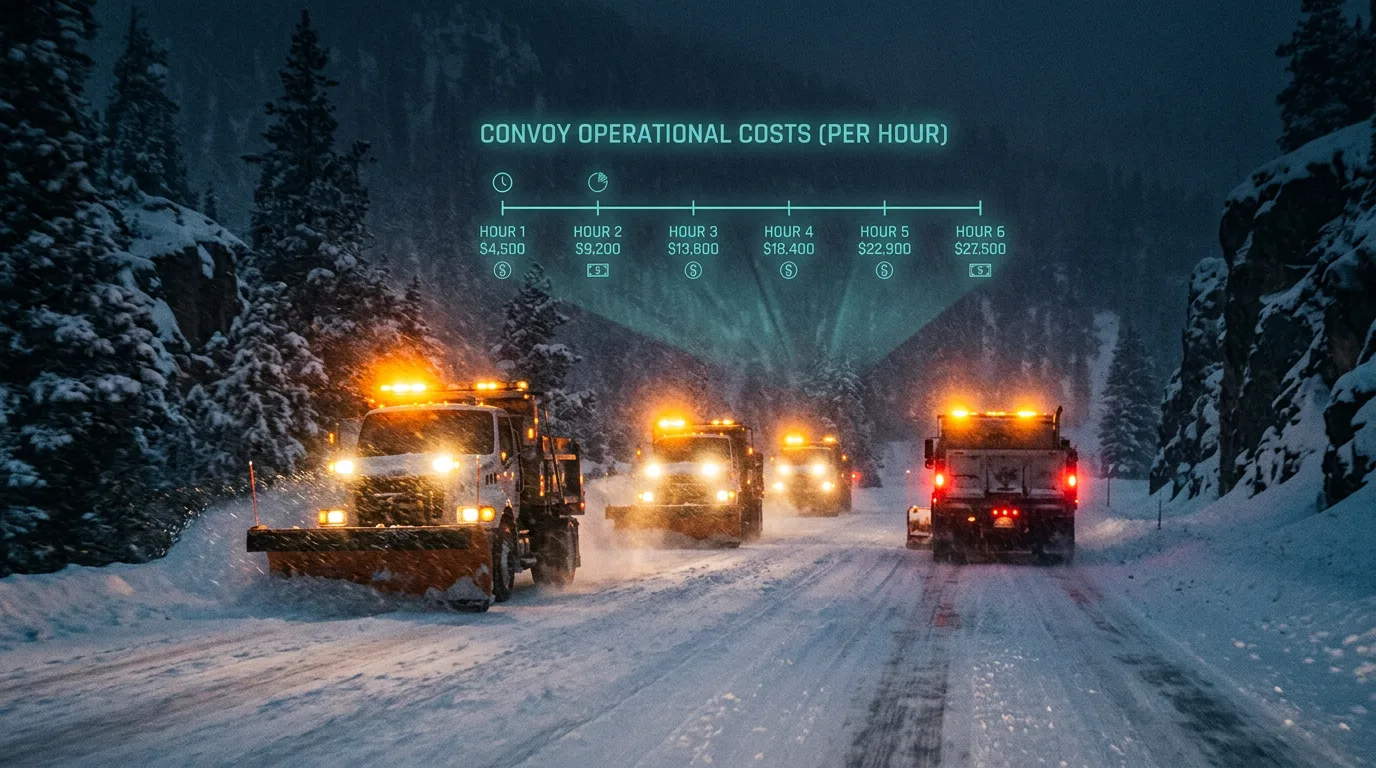
FEMA Snow Assistance: Documenting the 48 Hours That Count
October 21, 2026
FEMA snow assistance covers one continuous 48-hour window, and only with record or near-record snowfall. What qualifies and how to document it before winter.

ICS 214 to FEMA PA Reimbursement: Why Your Activity Logs Are Leaving Money on the Table
October 7, 2026
A step-by-step walk from ICS 214 activity logs to a Category B force account claim, and the five places eligible labor and equipment costs fall out of it.
The Federal Cost-Share Is Shrinking. Your Documentation Gaps Are About to Get Expensive.
March 29, 2026
Federal cost-share proposals could shift billions to state and local agencies. Documentation gaps become financial crises when every dollar counts.