
The $11 Billion Question: What Rutherford's "One Standard Tool" Means for SLED Disaster Reimbursement

The Question on the Record
On April 16, Rep. John Rutherford (R-FL) used his time at a House Appropriations Committee budget hearing on FY26 Department of Homeland Security funding to put a question to Acting FEMA Administrator Karen Evans that state, local, tribal, and territorial emergency managers have been living for two decades. The former Jacksonville Sheriff framed the gap this way:
We put together a National Incident Management System just for that — to kind of standardize all that — but we never created any tools to actually carry that out... Instead of having 50 different ways to report, we have one standard tool.
Then he put a number on it:
Upwards of $11 billion that are in arrears... Cities and counties are right now paying interest on loans because they had to do the work immediately. So a lot of that $11 billion is just going to go to pay for interest.
The figure is not rhetorical. NPR, CNN, Smart Cities Dive, and the National Association of Counties have all reported FEMA holding back roughly $11 billion in Public Assistance reimbursements to 45 states. Internal FEMA data puts the broader Public Assistance backlog closer to $14 billion. Local jurisdictions that did the response work on credit — the way response work is always financed in the first 72 hours — are now carrying interest as the wait extends into years. The full exchange is on the committee's hearing video.
A note on terms. SLED — State, Local, Educational, and Defense — is federal-contracting shorthand for the sub-federal public-sector buyers the one-standard-tool question is really about. FEMA's own term for Public Assistance recipients is SLTT — State, Local, Tribal, and Territorial. Both describe the jurisdictions carrying the $11 billion. This post uses SLED when talking about the buying audience for a standardized tool, and SLTT when talking about who FEMA actually writes Public Assistance checks to.
Evans acknowledged the data-collection problem and pivoted to an adjacent effort: contingent on FY26 appropriations passing without a lapse, a planned pilot between FEMA and HUD to reduce duplicate data re-entry across federal agencies. That is a real initiative. It is also a different problem.
Two Problems, Two Lanes
The FEMA–HUD pilot builds on the existing FEMA-HUD Computer Matching Agreement, which was established to prevent duplication of benefits between FEMA Individual Assistance and HUD's CDBG-Disaster Recovery program. Its job is to make sure the same household does not receive federal aid twice for the same housing loss. The beneficiary is the disaster survivor.
Rutherford was asking about a different pipeline. Public Assistance Category B — Emergency Protective Measures — reimburses state, local, tribal, and territorial governments for emergency response costs: force-account labor, overtime, equipment, materials, and contract support. That is where the $11 billion lives. The workflow is FEMA → State (Recipient) → Subrecipient. HUD is not in the pipe.
The two programs share a frustration in spirit: federal partners asking the same beneficiary for the same data through different doors. But the fix for duplicate survivor intake between two federal agencies is not the fix for fifty jurisdictions each reporting force-account labor in a different spreadsheet format. One is a federal integration problem. The other is a field-level standardization problem that starts the moment a responder signs in on an ICS 211.
The Cat B standardization question is still open. No one at the hearing committed to closing it.
What a Standardized Cat B Tool Would Actually Have to Do
Set the politics aside. A credible answer to the question on the record has to satisfy four conditions. Emergency managers and finance directors already know what they are.
It has to speak ICS as a native language. Organizational hierarchy on the ICS 203. Tactical assignments on the ICS 204. Resource check-in on the ICS 211. Activity logs on the ICS 214. Operational planning on the ICS 215. Demobilization on the ICS 221. Generic work-order or project management software can bolt ICS-shaped fields onto a different data model, but it will not mirror unity of command, span of control, or the relationships between the forms. A tool that does not think in ICS cannot produce Cat B documentation that survives a Public Assistance review.
It has to organize data by Operational Period. Public Assistance audits are conducted Operational Period by Operational Period: who did what, when, under whose command, for how long. A system that stores data by date stamp or user ID instead of by Operational Period is producing a reconstruction after the fact. Reviewers can tell the difference, and the difference costs money.
It has to track resources across the full lifecycle. Cat B reimbursement depends on proving that a specific resource — a firefighter, a backhoe, a portable light tower — checked in, was assigned to a tactical objective during a named Operational Period, logged activity against that assignment, and demobilized on an ICS 221. Miss any link and the line item gets denied. Tracking resources as a list is not sufficient; the system has to track them as a timeline.
It has to produce a PAPPG-aligned export, not a data dump. A defensible Cat B package contains force-account labor tied to a written pre-disaster labor policy, equipment rates cross-referenced to actual usage logs, materials supported by purchase records, and every cost cross-walked to the operation that incurred it. A standardized tool has to produce that package as a natural output of running the incident — not a six-month post-incident reassembly project.
A system that does all four shrinks the backlog by construction. The paperwork exists before FEMA asks for it, and the numbers are built up from operational ground truth rather than reverse-engineered from expense reports months later.
What This Means for Agencies in the Pipeline
The question asked on Capitol Hill this month is not new. It has been asked inside county EOCs and state emergency management agencies for the better part of twenty years: NIMS gave us the doctrine; nobody built the tool.
Platforms built to the ICS data model — like NIMS Logic — operate the way the question implies they should. Documentation is a byproduct of running the incident, not a separate reconstruction project after the dust settles. Every resource is tracked from check-in through demobilization. Every Operational Period produces its own defensible record. Cat B exports align with PAPPG because the data underneath was always organized that way.
If your agency is one of the 45 waiting on reimbursement right now, the number being cited in Washington is already your problem.
Ready to modernize your incident management?
See how NIMS Logic transforms emergency management from an administrative burden into operational advantage with real-time visibility and automated workflows.
Schedule a DemoEditorial Team
The NIMS Logic team combines decades of emergency management field experience with modern software engineering to build the incident management platform the industry has needed.
Continue Reading
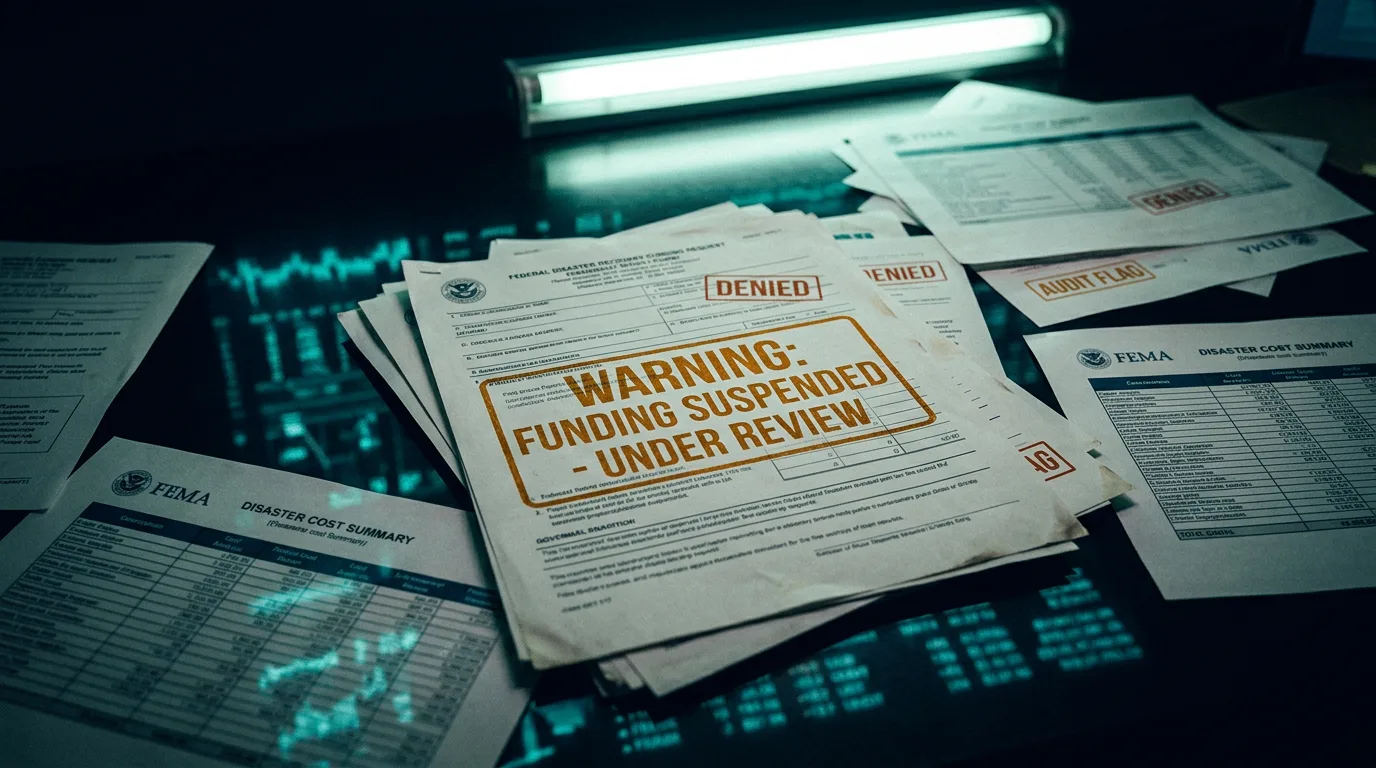
The Federal Cost-Share Is Shrinking. Your Documentation Gaps Are About to Get Expensive.
March 29, 2026
Federal cost-share proposals could shift billions to state and local agencies. Documentation gaps become financial crises when every dollar counts.

FEMA-HUD Data Sharing vs. SLED Reimbursement: Two Different Problems, Two Different Fixes
June 10, 2026
FEMA-HUD data sharing prevents duplicate survivor benefits. SLED reimbursement is getting your agency paid back. Two different problems, two different fixes.
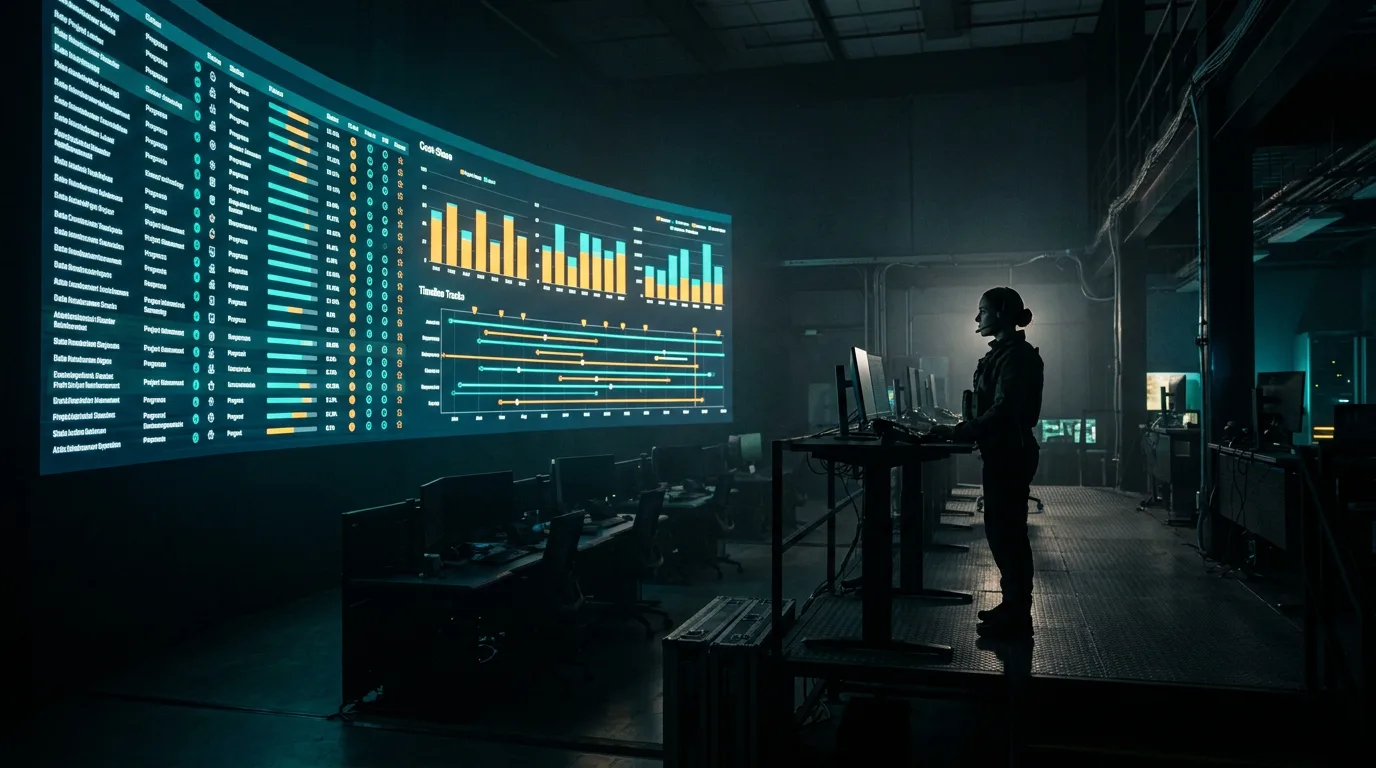
Section 313 Explained: FEMA's New Public Assistance Transparency Dashboard — and What It Means for Counties
May 18, 2026
Section 313 of H.R. 7147 forces FEMA to publish a project-level Public Assistance reimbursement dashboard. Here is what it requires and why counties still need their own records.